Ever wondered why some companies just seem to glide, while others are constantly tripping over their own feet? Or maybe you’ve felt that nagging frustration when a process just isn’t working as smoothly as it should, whether at your office or even in your daily routine.
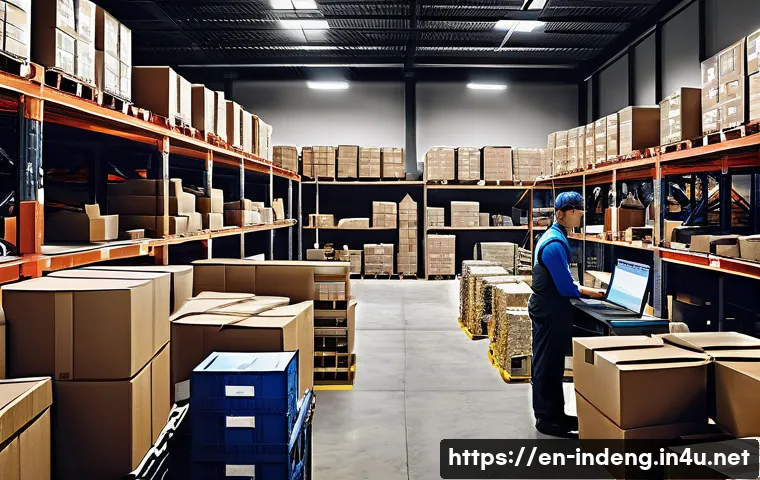
That feeling of wanting things to be more efficient, more streamlined, more *smart* – that’s essentially the heart of Industrial Engineering. It’s this incredible field dedicated to optimizing complex systems, not just in manufacturing, but in every single aspect of our lives.
And when we talk about making things smarter, it’s impossible not to mention Lean Manufacturing. It’s so much more than just a catchy phrase; it’s a revolutionary way of thinking that I’ve seen transform businesses firsthand.
Imagine stripping away all the unnecessary steps, all the waste, and focusing purely on what truly adds value. In today’s incredibly dynamic world, where supply chains are constantly tested and efficiency is the ultimate competitive edge, these principles are absolutely non-negotiable for success.
Trust me, once you grasp these concepts, you’ll start seeing the world through a whole new lens. Ready to unlock the secrets to unprecedented operational excellence?
Let’s explore exactly what makes Industrial Engineering and Lean Manufacturing the unstoppable duo they are.
Beyond the Assembly Line: Why Every Business Needs a Process Whisperer
It’s Not Just About Factories Anymore
When I first heard about Industrial Engineering, I pictured hard hats and assembly lines, right? Like something out of an old Ford factory documentary.
And while its roots are certainly there, seeing this field in action has completely blown my mind. It’s not just about optimizing how cars are built or widgets are manufactured anymore.
Think about your last trip to the doctor’s office, the maddening wait times, or even the process of ordering food online – there are inefficiencies everywhere!
I’ve personally seen industrial engineers streamline hospital emergency rooms, reduce wait times at theme parks, and even improve the flow of information in software development teams.
It’s about understanding a system, any system, and making it work smarter, not harder. This means looking at every tiny interaction, every handoff, every decision, and asking, “Is there a better way?” The impact on customer satisfaction and employee morale, not to mention the bottom line, is truly astounding.
Spotting the Hidden Snags in Your Daily Grind
Honestly, it’s wild how many things we just accept as “the way it is.” We grumble about slow processes, clunky software, or disorganized workflows, but rarely do we take a step back and truly analyze *why* it’s happening.
That’s where the magic of industrial engineering thinking comes in. It trains you to see the world through a different lens, a lens that’s constantly scanning for bottlenecks, unnecessary steps, and anything that isn’t directly adding value.
For instance, I once helped a small e-commerce business realize they were spending hours manually reconciling inventory across different platforms. A simple process change, leveraging existing tools, saved them an entire workday each week!
It wasn’t about a huge, expensive technological overhaul; it was about intelligently redesigning their existing workflow. The best part? Once you start looking, you see these opportunities everywhere – in your grocery shopping routine, your morning commute, or even how you manage your personal finances.
It truly makes you a better problem-solver in every aspect of life.
Unmasking the Silent Killers: Waste, Inefficiency, and How to Fight Back
The Eight Deadly Wastes: A Practical Guide
Okay, so let’s get real about what “waste” actually means in the business world, beyond just throwing things in the trash. This is where Lean Manufacturing principles become your superpower.
They introduce us to the “Eight Wastes,” often remembered by the acronym DOWNTIME (or TIMWOODS for some of you purists out there!). We’re talking about things like Defects, Overproduction, Waiting, Non-utilized talent, Transportation, Inventory, Motion, and Excess Processing.
And trust me, once you can identify these, you’ll see them lurking everywhere, silently draining resources and frustrating everyone involved. I remember working with a small bakery that was constantly overproducing certain pastries, leading to significant spoilage (defects, overproduction).
By simply observing their sales patterns more closely and implementing a ‘pull’ system based on actual customer demand, they slashed their waste and saw a noticeable jump in profits.
It’s not just about cutting costs; it’s about freeing up resources to focus on what genuinely matters to your customers.
The Cost of “Good Enough”
Many businesses, and even individuals, fall into the trap of thinking “good enough” is, well, good enough. But let me tell you, “good enough” is often the most expensive phrase you can utter.
The hidden costs of inefficiency are staggering. It’s not just the direct financial hit from wasted materials or lost time; it’s the ripple effect. When processes are clunky, employees get frustrated, leading to lower morale and higher turnover.
Customers experience delays or errors, damaging your reputation and sending them straight to your competitors. I’ve seen companies bleed money for years because they were unwilling to invest a little time and effort into process improvement.
The cumulative effect of small inefficiencies can snowball into major operational headaches. Think about the cumulative effect of a five-minute delay in a process that happens hundreds of times a day.
That’s hours, days, weeks of lost productivity that could be channeled into innovation or better customer service. Ignoring these “silent killers” is like leaving money on the table – and who wants to do that?
The Secret Sauce of Smooth Operations: Flow, Pull, and Continuous Improvement
From Push to Pull: A Mindset Shift
One of the most revolutionary concepts I encountered in Lean thinking was the shift from “push” to “pull” systems. For so long, businesses operated on a “push” model: make as much as you can, push it down the line, and hope someone buys it.
This often led to massive inventories, storage costs, and ultimately, waste. But a “pull” system flips that on its head. Imagine a coffee shop where the barista only starts making your latte *after* you’ve ordered it, and the milk is only restocked when the last carton is almost empty.
That’s a pull system in action! It’s about letting actual customer demand dictate what gets produced and when, minimizing overproduction and waiting times.
I once consulted for a small custom furniture maker who was constantly overwhelmed with raw materials they didn’t need yet. By implementing a simple Kanban-like system, where materials were only ordered when a specific customer order came in, their workshop became instantly less cluttered, and their cash flow improved dramatically.
It felt like they finally took a deep breath.
Kaizen: The Power of Small, Consistent Steps
We often think of improvement as these massive, disruptive projects that require huge budgets and months of planning. But Lean teaches us the beauty of Kaizen – the philosophy of continuous, incremental improvement.
It’s about making small, everyday changes that, over time, add up to monumental results. Think about improving your personal fitness: you don’t go from zero to a marathon overnight.
You take small, consistent steps – a 10-minute walk today, a healthier meal tomorrow. The same applies in business. Encourage your team to identify tiny frustrations and suggest small fixes.
Maybe it’s rearranging a workspace for better flow, simplifying a form, or automating a repetitive email. The brilliance of Kaizen is that it empowers everyone to be an agent of change, fostering a culture where “good enough” is always challenged by “how can we make it a little better?” It’s a powerful psychological shift that truly drives sustained excellence.
Transforming Chaos into Clarity: Data-Driven Decisions for Dummies
Why Gut Feelings Aren’t Enough Anymore
Let’s be honest, we all have those moments where we just *feel* something is right, or we make decisions based on what “we’ve always done.” And while intuition has its place, relying solely on gut feelings in today’s complex business environment is like navigating with your eyes closed.
You need data to illuminate the path, to show you where the real problems lie, and to confirm whether your solutions are actually working. Without objective measurements, how do you know if that new process actually saved time, or if that marketing campaign truly boosted sales?
I’ve seen countless discussions spiral into endless debates because no one had the hard numbers to back up their claims. Data takes the guesswork out of it and allows for truly informed, strategic decision-making.
It’s about moving from “I think” to “I know.”
Simple Tools for Powerful Insights
Now, don’t let the word “data” scare you into thinking you need a degree in statistics or fancy, expensive software. Often, the most powerful insights come from incredibly simple tools.
We’re talking about basic spreadsheets, flowcharts, Pareto charts, or even just a trusty pen and paper to observe and track a process. The key is knowing what to measure and how to interpret it.
For example, if you’re trying to reduce customer wait times, simply tracking the time from arrival to service for a week can reveal patterns and bottlenecks you never knew existed.
Or if you want to understand why a certain product isn’t selling, analyzing website traffic combined with customer feedback can provide invaluable direction.
It’s about asking the right questions and then systematically collecting information to answer them. The clarity you gain from even basic data analysis is often mind-blowing.
| Waste Type | Description | Real-World Example | Potential Impact on Business |
|---|---|---|---|
| Defects | Errors, rework, or anything that doesn’t meet quality standards. | Mistakes on a customer order, faulty product. | Increased costs, customer dissatisfaction, reputation damage. |
| Overproduction | Producing more than is needed or before it’s needed. | Baking too many cakes that spoil, printing too many brochures. | Storage costs, waste of materials, tied-up capital. |
| Waiting | Time spent idle, waiting for the next step in a process. | Customers waiting for service, employees waiting for approvals. | Lost productivity, frustrated customers/employees, missed opportunities. |
| Non-utilized Talent | Underutilizing skills, ideas, and creativity of employees. | Employees not empowered to suggest improvements, limited training. | Low morale, missed innovation, poor problem-solving. |
| Transportation | Unnecessary movement of products or materials. | Moving raw materials repeatedly between warehouses, excessive internal mail. | Increased costs, potential for damage, delays. |
| Inventory | Excess raw materials, work-in-progress, or finished goods. | Stockpiling parts, having too many unsold items in stock. | Storage costs, obsolescence risk, tied-up capital, hidden defects. |
| Motion | Unnecessary movement of people or equipment. | Searching for tools, walking long distances to retrieve supplies. | Lost time, physical strain, decreased efficiency. |
| Excess Processing | More work or steps than are required by the customer. | Over-packaging a product, redundant data entry. | Increased costs, wasted effort, longer lead times. |
Building a Culture of Excellence: Empowering Teams for Peak Performance
Everyone’s a Problem-Solver
You know, when I first started exploring these concepts, I thought it was all about fancy tools and complicated algorithms. But the absolute truth is, the heart of Industrial Engineering and Lean Manufacturing lies in people.
It’s about fostering an environment where *everyone* feels empowered to identify problems, suggest solutions, and actively participate in making things better.
The person on the front line, whether they’re packing boxes, answering calls, or developing code, is often the one with the most intimate knowledge of where the inefficiencies truly lie.

They see the daily struggles, the small snags that add up to big headaches. When you create a culture where their voice is not just heard but actively sought out, that’s when real magic happens.
I’ve witnessed incredible morale boosts and innovative solutions emerge from empowering frontline staff. It feels amazing to contribute, and it makes work feel less like a chore and more like a collaborative mission.
The Role of Leadership in Sustaining Change
Of course, all this talk about empowerment and continuous improvement sounds great on paper, but it needs strong, supportive leadership to truly take root and flourish.
Leaders aren’t just there to dictate; they’re there to facilitate, coach, and remove obstacles. They need to champion the vision, provide the necessary resources, and, most importantly, lead by example.
If leaders aren’t willing to adapt, learn, and embrace change themselves, then any improvement efforts will quickly fizzle out. I’ve seen initiatives fail not because the ideas were bad, but because leadership wasn’t fully committed or didn’t create a safe space for experimentation and learning.
Sustaining a culture of excellence means actively recognizing efforts, celebrating small wins, and understanding that mistakes are opportunities for growth, not grounds for punishment.
It’s a marathon, not a sprint, and leadership sets the pace and keeps the team hydrated.
Your Wallet Will Thank You: The Real ROI of Smart Operations
Beyond Cost Cutting: The Value Proposition
Let’s talk money, because ultimately, businesses need to be profitable. While Industrial Engineering and Lean Manufacturing are often associated with cost cutting, that’s really just scratching the surface of their financial impact.
Yes, reducing waste, streamlining processes, and improving efficiency *will* absolutely lower your operational costs. But the true value proposition extends far beyond that.
Think about improved customer satisfaction from faster service or higher quality products. Happy customers become repeat customers, and they tell their friends – that’s organic growth!
Consider the boost in employee morale and productivity when their work is less frustrating and more meaningful. That translates to higher retention and a more engaged workforce, saving on recruitment and training costs.
I’ve personally seen businesses that embraced these principles not only save a fortune but also unlock new revenue streams by being more agile and responsive to market demands.
It’s a holistic approach that builds a stronger, more resilient business.
Investing in Efficiency Pays Dividends
Sometimes, the initial thought of investing time and resources into process improvement can feel daunting, especially for smaller businesses. “We’re too busy to slow down and fix things,” is a common refrain I hear.
But what if “fixing things” actually makes you *less* busy in the long run? It’s like maintaining your car: a little preventative maintenance today saves you from a massive, expensive breakdown tomorrow.
Investing in industrial engineering expertise, training your team in Lean methodologies, or even just dedicating time to analyze your current workflows isn’t an expense; it’s an investment with a significant return.
I worked with a local restaurant that was struggling with food waste and inconsistent dish quality. After a focused three-month effort to standardize recipes, optimize kitchen layout, and train staff on waste reduction, they saw their food costs drop by 15% and customer reviews skyrocket.
The upfront effort paid off tenfold in just a year, making them far more profitable and less stressful to run. It’s about building long-term sustainable success, not just short-term fixes.
From Frustration to Flow: My Personal Journey to Operational Zen
My “Aha!” Moment with Lean
You know, before I fully grasped these concepts, I often felt a deep, nagging frustration with inefficiencies in my own work and even personal life. I remember being stuck in a seemingly endless loop of email replies, project handoffs that always had missing information, and just generally feeling like I was running on a treadmill, going nowhere fast.
My “aha!” moment truly hit when I started applying the principle of “flow” to a particularly messy content creation process. We were constantly stopping and starting, waiting on approvals, or dealing with last-minute changes.
It felt like walking through treacle. By simply mapping out the entire process, identifying the major bottlenecks (mostly waiting for feedback), and then implementing a clear communication protocol, the entire workflow transformed.
It felt like a mental weight had been lifted, and suddenly, tasks that once took days were being completed in hours. It wasn’t about working harder; it was about working *smarter*, and the feeling of that smooth, uninterrupted flow was truly liberating.
Bringing It Home: Applying Principles to Your Life
Here’s the cool thing: you don’t need to be a CEO or a factory manager to benefit from this way of thinking. These principles are incredibly powerful and applicable to your everyday life.
Ever feel overwhelmed by your to-do list? Try breaking tasks down, prioritizing, and eliminating anything that doesn’t add value (like over-planning for minor errands).
Does your morning routine feel chaotic? Look for waste in motion – are your coffee mugs too far from the coffee maker? Are you constantly searching for your keys?
Even organizing your pantry or decluttering your digital files can be a form of Lean applied to your personal space. I’ve found that consciously applying these principles has made me feel more in control, less stressed, and surprisingly, more productive in my personal pursuits.
It’s about cultivating a mindset of continuous improvement, not just in business, but in becoming the most efficient and fulfilled version of yourself.
So, next time you feel a snag in your day, ask yourself: “How can I make this flow better?” You might be surprised by the ingenious solutions you come up with!
Wrapping Things Up
And there you have it, folks! My hope is that this deep dive into the world of industrial engineering and Lean principles has sparked something in you, maybe even shifted your perspective on how you view the “way things are.” It’s truly incredible to witness how these seemingly complex ideas, when broken down, become powerful tools for eliminating frustration and unlocking genuine potential, whether in a sprawling corporation or just your personal daily routine. What started for me as a fascination with factory floors has evolved into a passion for making every system, every interaction, and every moment just a little bit better. It’s about building a foundation for smoother sailing, less stress, and ultimately, more fulfilling outcomes for everyone involved. Trust me, once you start seeing the world through this lens, you won’t be able to unsee the opportunities for improvement!
Handy Tips You’ll Want to Bookmark
1. Start Small: Don’t try to overhaul everything at once. Pick one small, frustrating process in your work or home life and try to apply a single Lean principle, like eliminating waste or improving flow. You’ll be amazed by the impact!
2. Observe Actively: Before you try to fix anything, simply observe. Watch a process unfold without judgment. What are the unnecessary steps? Where do people wait? What creates friction? This fresh perspective is invaluable.
3. Ask “Why?” (Five Times!): When you encounter a problem, don’t just treat the symptom. Keep asking “why?” five times to dig down to the root cause. This prevents superficial fixes and leads to lasting solutions.
4. Empower Your Team (or Yourself): Remember, the person closest to the problem often has the best solution. Encourage open communication and a culture where everyone feels comfortable suggesting improvements, no matter how small.
5. Embrace Continuous Improvement: Think of efficiency as a journey, not a destination. There’s always a little something that can be tweaked or refined. Celebrate small wins and keep that mindset of ‘better is always possible.’ It’s surprisingly addictive!
Key Insights to Remember
What I’ve really learned through my own journey with operational excellence is that it’s less about rigid rules and more about cultivating a thoughtful, proactive mindset. It’s about seeing the hidden opportunities in every bottleneck and realizing that “good enough” is rarely truly good. My personal experience has repeatedly shown me that by applying concepts like waste reduction, improving flow, and empowering teams, businesses not only cut costs but also dramatically boost morale, customer satisfaction, and ultimately, their bottom line. It’s not just a theoretical concept; it’s a practical toolkit that delivers tangible results, time and time again. Think of it: when processes run smoothly, employees are happier, customers are delighted, and the business thrives. This holistic approach builds resilience and fosters innovation, allowing companies to adapt faster and stay ahead of the curve. Ignoring these principles is, frankly, leaving money and potential on the table.
From a profitability standpoint, the ROI on investing in these areas isn’t just about saving a few bucks here and there. It’s about unlocking exponential growth. I’ve witnessed firsthand how businesses that embrace these principles transform from struggling entities into lean, agile, and highly profitable operations. It makes them more attractive to customers, better employers, and stronger competitors. This isn’t just about efficiency for efficiency’s sake; it’s about creating sustainable value. So, whether you’re a budding entrepreneur or just someone looking to streamline your personal life, remember that clarity, efficiency, and continuous improvement are not just buzzwords; they’re the secret sauce to a more productive, profitable, and less stressful existence. It’s truly a game-changer once you commit to it.
Frequently Asked Questions (FAQ) 📖
Q: What exactly is Industrial Engineering? Is it just for big factories, or does it have a broader impact?
A: You know, when I first heard “Industrial Engineering,” my mind instantly went to massive assembly lines and complicated machinery. And yes, it absolutely plays a huge role there!
But honestly, I’ve come to realize it’s so much more encompassing than that. Think of it this way: have you ever been frustrated by a chaotic grocery store checkout, or a disorganized kitchen?
An Industrial Engineer looks at any system – be it a factory floor, a hospital, a logistics network, or even your morning routine – and asks, “How can we make this smoother, faster, safer, and just plain better?” It’s about designing processes and systems so people can work smarter, not just harder.
I remember applying some of these principles to streamline my own content creation process, and the difference in my daily stress levels and overall output was incredible!
It’s truly about optimizing how everything works, everywhere.
Q: Lean Manufacturing sounds intriguing, but how does it actually work in practice? Can I apply it to my small business or even my daily life?
A: Lean Manufacturing, to me, isn’t just a buzzword; it’s a profound shift in how you view work and value. It’s like decluttering your mental and physical space, but for an entire operation!
At its core, it’s about relentlessly hunting down and eliminating anything that doesn’t add value for the customer – or for you, if you’re applying it personally.
I once helped a small online retailer struggling with slow order fulfillment. We applied Lean principles by mapping out their entire process, from order to delivery.
We discovered so much “waiting” time and unnecessary steps. By simply reorganizing their picking process and optimizing their packaging station, they slashed their lead times by 30% and saw a huge jump in customer satisfaction.
It’s not just for manufacturing giants; I’ve personally used Lean thinking to organize my digital files, plan my week, and even streamline my grocery shopping!
It’s truly about focusing on what truly matters and letting go of the rest.
Q: How do Industrial Engineering and Lean Manufacturing connect?
A: re they two separate things, or do they truly need each other? A3: This is where the magic really happens, and it’s something I get asked about all the time!
Think of Industrial Engineering as the comprehensive toolbox, filled with methods, analytical techniques, and scientific principles for designing and improving systems.
Lean Manufacturing, on the other hand, is a powerful philosophy within that toolbox, specifically focused on maximizing customer value while minimizing waste.
So, an Industrial Engineer might use a Lean approach – like Value Stream Mapping or Kaizen – as a tool to identify inefficiencies in a production line or a service process.
I always tell people they’re like two sides of the same incredibly powerful coin. You can’t truly optimize a system to its fullest potential without the foundational engineering principles that Industrial Engineering offers, guided by the waste-eliminating, value-focused mindset of Lean.
They truly elevate each other, creating an unstoppable force for operational excellence. It’s a game-changer!