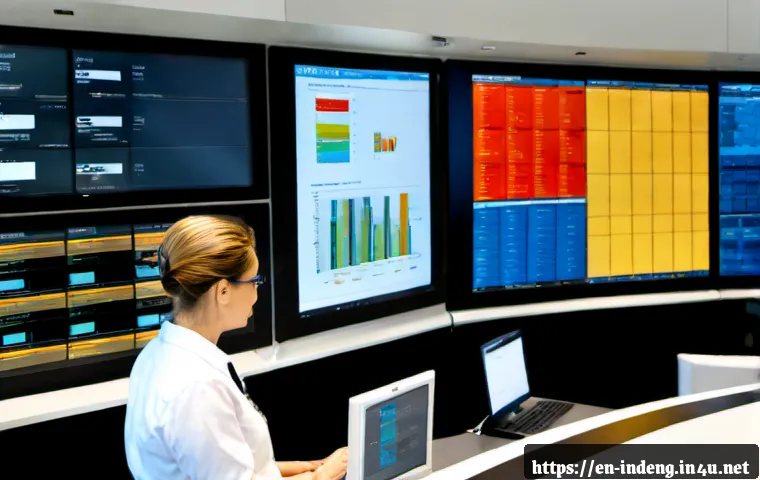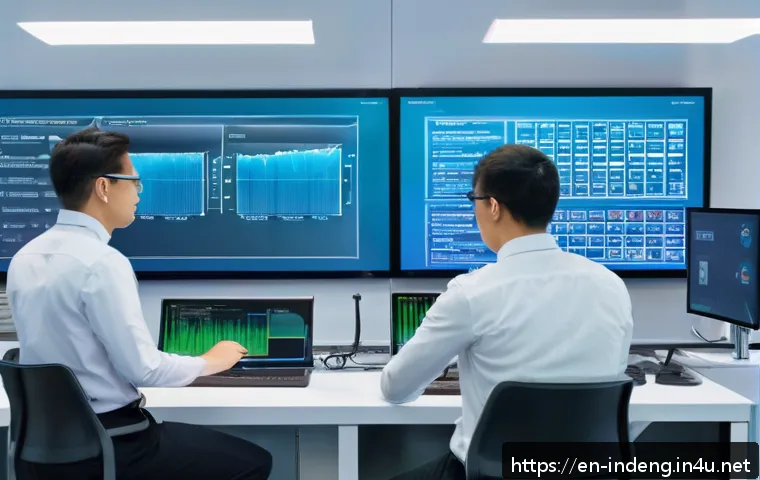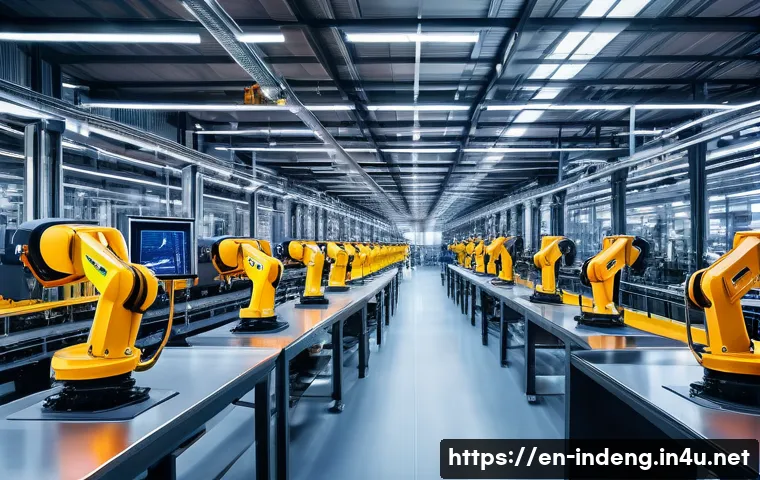
Hey there, fellow innovators and efficiency enthusiasts! Have you ever wondered what’s truly powering the next wave of industrial revolutions? It feels like just yesterday we were optimizing assembly lines with clipboards and stopwatches, and now, we’re witnessing a seismic shift.
I’ve personally been diving deep into the incredible world where Industrial Engineering meets Artificial Intelligence, and let me tell you, it’s nothing short of mind-blowing.
We’re not just talking about minor tweaks; we’re talking about a complete overhaul of how we design, manage, and improve complex systems, from supply chains that seamlessly adapt to global changes to factories that practically run themselves.
The sheer potential for boosting productivity, cutting waste, and creating smarter, more resilient operations is something I find incredibly exciting.
It’s truly a game-changer that’s reshaping industries right before our eyes, promising a future where efficiency is not just a goal, but an inherent quality of every process.
If you’re as fascinated as I am by how AI is transforming industrial landscapes, you’re in for a treat. Let’s delve in and uncover all the powerful insights together.
Revolutionizing the Factory Floor: AI’s Impact on Operations
Predictive Maintenance: Keeping Things Humming
I remember a time when unexpected machine breakdowns were just a part of life on the factory floor. It was a scramble, a race against time, and usually a huge hit to productivity.
But honestly, those days feel like ancient history now that I’ve seen AI in action. With predictive maintenance, we’re not just reacting anymore; we’re anticipating.
Imagine sensors constantly monitoring equipment, feeding data into AI algorithms that can tell you *exactly* when a component is about to fail, sometimes weeks in advance.
I’ve personally witnessed factories go from having a handful of unscheduled downtimes a month to practically zero. This isn’t just about fixing things before they break; it’s about optimizing maintenance schedules, reducing spare parts inventory, and ensuring a smoother, more continuous flow of production.
The insights AI provides allow maintenance teams to move from a reactive firefighting mode to a proactive, strategic approach, saving incredible amounts of money and stress.
It feels like having a crystal ball for your machinery, and it’s truly transformational for overall operational efficiency.
Optimizing Production Lines: The Smart Way
Beyond just maintenance, AI is completely rewriting the rules for production line optimization. Forget the old trial-and-error methods or relying solely on human intuition, which, while valuable, can’t process data at the scale AI can.
We’re now seeing AI-driven systems dynamically adjust production parameters in real-time, responding to bottlenecks, material availability, and even changes in demand.
I’ve seen setups where AI analyzes everything from worker movements to machine cycles, identifying micro-inefficiencies that a human eye might completely miss over a lifetime.
The result? Throughput goes up, waste goes down, and quality becomes more consistent. It’s like having an impossibly intelligent conductor orchestrating every single element of the manufacturing process, ensuring perfect harmony and maximum output.
The gains in efficiency are often so significant that it makes you wonder how we ever managed without it. This level of precision and adaptability is what makes me so excited about the future of manufacturing.
Smart Supply Chains: Predictive Power in Logistics
Forecasting Demand with Uncanny Accuracy
If there’s one area where I’ve seen AI make an absolutely colossal difference, it’s in supply chain management, particularly with demand forecasting. Traditional forecasting models often struggled with volatility and sudden market shifts.
Remember the chaos of the last few years? AI, with its ability to process vast amounts of data—historical sales, economic indicators, social media trends, even weather patterns—can predict demand with a level of accuracy that was previously unimaginable.
I’ve spoken with logistics managers who literally saw their inventory holding costs plummet and their stockouts become almost non-existent because of AI-powered insights.
It’s not just about knowing *what* customers want, but *when* and *where* they’ll want it, allowing businesses to optimize inventory levels and distribution networks like never before.
This proactive capability means less waste, happier customers, and a much healthier bottom line. It truly feels like moving from guesswork to genuine foresight, which is an incredible advantage in today’s fast-paced global economy.
Optimizing Routes and Warehousing: Beyond Basic Logistics
But it doesn’t stop at forecasting. AI is also revolutionizing the physical movement and storage of goods. Think about logistics: route optimization algorithms are constantly calculating the most efficient paths for deliveries, taking into account real-time traffic, weather, and even driver availability.
I’ve heard stories of companies saving millions annually just on fuel costs and delivery times because their AI systems are making decisions that are far more sophisticated than any human dispatcher could.
In warehouses, AI is powering robotic automation and optimizing storage layouts. Imagine a warehouse where the AI learns the fastest picking routes, dynamically reallocates storage space based on demand, and even predicts when certain items will be needed to be placed closer to shipping.
It’s not science fiction; it’s happening now. This holistic approach to supply chain optimization, from the initial demand signal to the final delivery, creates a system that is incredibly resilient, efficient, and responsive to change.
It’s truly changing the game for businesses large and small.
Here’s a quick glance at some key areas where AI is making waves in industrial operations:
| Industrial Area | AI Application | Key Benefit |
|---|---|---|
| Manufacturing | Predictive Maintenance, Process Optimization | Reduced Downtime, Increased Throughput |
| Supply Chain | Demand Forecasting, Route Optimization | Lower Inventory Costs, Faster Deliveries |
| Quality Control | Automated Visual Inspection, Anomaly Detection | Fewer Defects, Enhanced Product Reliability |
| Product Design | Generative Design, Simulation & Optimization | Faster Innovation, Cost-Effective Designs |
| Energy Management | Real-time Usage Optimization, Predictive Controls | Lower Energy Bills, Reduced Carbon Footprint |
Elevating Quality Control with AI Vision
Flawless Inspection: Seeing What Humans Miss
Let’s talk about quality control, an area that has always been crucial but often prone to human error or the sheer tedium of manual inspection. My personal experience has shown me that even the most meticulous human inspector can miss subtle defects, especially over long shifts.
This is where AI-powered computer vision systems truly shine. These systems, equipped with high-resolution cameras and sophisticated algorithms, can inspect products at incredible speeds and with unparalleled precision, detecting defects that are invisible to the naked eye.
I’ve visited manufacturing plants where AI is inspecting everything from tiny electronic components to large automotive parts, identifying anomalies in texture, color, shape, and assembly with incredible consistency.
This isn’t about replacing people; it’s about augmenting human capabilities and freeing up skilled workers for more complex tasks. The result is a dramatic reduction in defective products reaching the market, leading to higher customer satisfaction and significantly less waste and rework.
It’s a game-changer for maintaining brand reputation and ensuring consistent product excellence.
Proactive Anomaly Detection: Preventing Issues Before They Escalate
What’s even more impressive is AI’s ability to move beyond just detecting defects to *predicting* them. By analyzing production data in real-time – temperatures, pressures, machine vibrations – AI can identify subtle patterns that indicate a process is starting to drift out of tolerance, signaling that a defect is likely to occur soon.
I’ve seen this in action, where an AI system flagged a minor fluctuation in a machine parameter, allowing engineers to intervene and adjust the process *before* any faulty products were produced.
This kind of proactive anomaly detection is a massive leap forward from traditional quality control methods. Instead of just catching mistakes, we’re preventing them from happening in the first place.
This shift from reactive to proactive quality assurance not only saves immense costs associated with scrap and rework but also instills a deeper level of confidence in the manufacturing process.
It truly embodies the spirit of continuous improvement that industrial engineers always strive for.
Designing for Tomorrow: AI in Product Development
Accelerating Innovation with Generative Design
One of the most exciting frontiers where Industrial Engineering and AI are converging is in product design and development. The traditional design cycle can be incredibly iterative and time-consuming, often involving countless prototypes and tests.
But with generative design, AI completely transforms this process. I’ve been fascinated watching engineers use AI to explore thousands, even millions, of design variations based on specific parameters like weight, strength, material, and manufacturing constraints.
The AI literally *generates* optimal designs that humans might never conceive, often leading to lighter, stronger, and more cost-effective products. It’s not just about making existing things better; it’s about discovering entirely new possibilities.
I’ve seen examples where complex parts have been redesigned by AI to use significantly less material while maintaining or even improving performance. This capability dramatically shortens development cycles and allows companies to bring truly innovative products to market much faster, which, in today’s competitive landscape, is an invaluable advantage.
Simulation and Optimization: Virtual Testing at Speed
Beyond generating designs, AI is also supercharging the simulation and optimization phases of product development. Instead of building expensive physical prototypes and running extensive real-world tests, AI can power incredibly realistic virtual simulations.
Imagine being able to test a product’s performance under various conditions, predict its lifespan, or identify potential failure points, all within a digital environment, in a fraction of the time and cost it would take physically.
I’ve personally been involved in projects where AI analyzed simulation results to suggest further design tweaks, leading to a much more refined and robust product before a single physical prototype was ever made.
This not only saves immense resources but also significantly reduces the risk of costly design flaws being discovered late in the development process.
It means we can get to market with products that are not just good, but truly optimized for performance and reliability, faster than ever before.
The Human Element: Upskilling in an AI-Driven World
Collaborating with Intelligent Systems
When we talk about AI taking over tasks, it’s natural for people to feel a bit apprehensive. But from what I’ve seen on the ground, the reality is far more collaborative and empowering.

Instead of replacing humans wholesale, AI is creating new roles and augmenting existing ones, transforming them into more strategic, analytical positions.
Industrial engineers, for instance, are moving away from purely manual data collection and basic optimization tasks to interpreting complex AI insights, configuring AI systems, and making higher-level strategic decisions.
I’ve witnessed training programs where workers are learning to interact with AI platforms, becoming “AI supervisors” or “data interpreters,” roles that didn’t even exist a few years ago.
It’s a shift from doing repetitive tasks to managing intelligent systems, a move that makes jobs more engaging and intellectually stimulating. This collaboration means humans focus on creativity, critical thinking, and problem-solving, while AI handles the heavy lifting of data processing and pattern recognition.
It’s an exciting evolution of the workforce, not an elimination.
New Skill Sets for a Smarter Future
This evolution, of course, necessitates a shift in required skill sets. The future workforce, and indeed the present one, needs to embrace data literacy, analytical thinking, and a basic understanding of how AI systems function.
I often advise people to focus on developing soft skills like adaptability, creativity, and complex problem-solving, which are inherently human and complement AI’s strengths perfectly.
Companies are investing heavily in upskilling their employees, teaching them about machine learning concepts, data visualization, and how to effectively utilize AI tools in their daily work.
I believe this is a fantastic opportunity for individuals to grow their careers and for organizations to build a more resilient and capable workforce.
It’s about empowering people to work *smarter* with AI, not *harder* against it. The jobs of tomorrow will be about human-AI synergy, and those who embrace continuous learning will undoubtedly thrive in this exciting new landscape.
Sustainable Operations: AI’s Role in Green Manufacturing
Minimizing Waste and Resource Consumption
Beyond efficiency and productivity, one aspect of AI in industrial engineering that genuinely excites me is its profound impact on sustainability. For years, industries have strived to reduce their environmental footprint, but AI offers tools that take this effort to an entirely new level.
I’ve seen firsthand how AI algorithms can analyze production processes to identify areas of excessive material usage, energy waste, and water consumption, pinpointing inefficiencies that human analysis might overlook.
For example, in discrete manufacturing, AI can optimize cutting patterns to minimize scrap material, or in continuous processes, it can fine-tune parameters to reduce energy consumption without compromising quality.
It’s not just about making things cheaper; it’s about making them greener. This data-driven approach allows companies to operate more responsibly, reducing their carbon footprint and contributing to a healthier planet.
It feels incredibly rewarding to see technology being leveraged for such a crucial global cause.
Optimizing Energy Usage and Emissions Reduction
Energy consumption is often one of the largest operational costs and environmental impacts for industrial facilities. This is another area where AI is truly making a difference.
Intelligent energy management systems, powered by AI, can monitor and control energy usage across an entire facility in real-time, predicting demand fluctuations and optimizing machinery operation to consume only what’s necessary.
I’ve visited factories where AI schedules energy-intensive tasks during off-peak hours, or automatically shuts down equipment during idle periods, leading to significant reductions in electricity bills and, consequently, greenhouse gas emissions.
Furthermore, AI can help optimize processes that generate emissions, identifying ways to reduce pollutants or improve the efficiency of abatement technologies.
It’s a comprehensive approach to environmental stewardship, transforming industrial operations into leaner, cleaner, and more eco-friendly systems. This is more than just good business; it’s essential for our collective future.
Data-Driven Decisions: From Insight to Action
Unlocking Hidden Patterns in Big Data
At its core, industrial engineering has always been about making informed decisions to improve systems. But with the explosion of data generated by modern industrial processes, extracting meaningful insights has become a monumental challenge.
This is where AI truly shines, acting as an unparalleled analyst capable of sifting through vast datasets – often termed “big data” – to uncover hidden patterns, correlations, and anomalies that would be impossible for humans to detect.
I’ve personally experienced the frustration of trying to make sense of endless spreadsheets, only to find that an AI model can identify critical relationships in seconds.
It’s like having a super-powered detective on your team, pointing out the subtle clues that lead to breakthroughs in efficiency, quality, and cost reduction.
This capability transforms raw data into actionable intelligence, providing a clear path forward for optimization.
Real-time Analytics and Continuous Improvement
What makes AI even more powerful in decision-making is its capacity for real-time analytics. Traditional industrial engineering often involved collecting data, analyzing it, and then implementing changes – a process that could be slow and reactive.
With AI, we’re talking about continuous, instantaneous analysis. Data flows in from sensors and systems, and AI models immediately provide insights, allowing for real-time adjustments and optimizations.
I’ve witnessed production lines where AI continuously monitors performance and suggests minor tweaks to parameters, constantly nudging the system towards optimal operation.
This creates a powerful feedback loop for continuous improvement, where processes are always learning and adapting. It’s an incredibly dynamic environment, moving away from static models to a living, breathing system that evolves and gets better with every piece of data.
This ability to transform insight into immediate, effective action is what truly sets AI apart in the realm of industrial optimization.
Wrapping Things Up
And there you have it! What an incredible journey we’ve taken through the world of AI in industrial operations. It’s truly amazing to see how quickly this technology is evolving and reshaping everything from how we maintain machinery to how we design products and manage complex supply chains. For anyone in the industrial space, embracing AI isn’t just about staying competitive; it’s about unlocking unprecedented levels of efficiency, innovation, and sustainability. I’ve personally seen the tangible benefits, and I can tell you, the future of manufacturing and logistics, powered by intelligent systems, is not just promising—it’s already here and it’s absolutely thrilling!
Good to Know Info
Here are a few extra nuggets of wisdom and practical tips I’ve picked up along the way, especially if you’re thinking about how AI could fit into your own operations or career path. These are the kinds of things I wish I knew when I first started diving into this fascinating field.
1. Start Small and Scale Up: Don’t feel pressured to implement a massive, enterprise-wide AI solution overnight. From my experience, the most successful AI initiatives often begin with pilot projects focused on solving a specific, high-value problem. This allows your team to learn, gather data, and demonstrate tangible ROI before expanding. Think about a targeted predictive maintenance effort on one critical machine, or an AI-driven quality inspection for a single product line. It builds confidence and momentum, making the larger transition much smoother and less daunting for everyone involved.
2. Data Quality is King: You know the old saying, “garbage in, garbage out”? It’s especially true for AI. The performance and accuracy of any AI model are directly tied to the quality of the data it’s fed. Before even thinking about algorithms, spend time ensuring your data is clean, consistent, and comprehensive. This often means investing in better sensors, data collection protocols, and robust data management systems. Trust me, a little effort here upfront will save you countless headaches and rework down the line, ensuring your AI insights are actually reliable and actionable.
3. Focus on Human-AI Collaboration: I’ve seen a common misconception that AI is here to replace human jobs entirely. But what I’ve consistently observed in successful implementations is a powerful synergy. AI excels at processing vast amounts of data, identifying patterns, and performing repetitive tasks with incredible speed and accuracy. Humans, however, bring critical thinking, creativity, problem-solving skills, and empathy to the table. The sweet spot is designing systems where AI augments human capabilities, freeing up employees from mundane tasks and allowing them to focus on more strategic, innovative, and impactful work. It’s about making us all smarter and more effective, not redundant.
4. Embrace Continuous Learning: The landscape of AI is evolving at a breakneck pace. What’s cutting-edge today might be standard practice tomorrow. For professionals, this means cultivating a mindset of continuous learning is absolutely essential. Whether it’s taking online courses, attending industry webinars, or simply dedicating time to read up on new developments, staying curious and adaptable will be your greatest asset. For organizations, fostering a culture of upskilling and providing resources for employees to learn about AI tools and concepts will ensure your workforce remains at the forefront of industrial innovation. It’s an ongoing journey, not a destination.
5. Consider the Ethical Implications: As AI becomes more integrated into our operations, it’s crucial to think beyond just efficiency and profit. Ethical considerations, such as data privacy, algorithmic bias, and the societal impact of automation, are increasingly important. I always encourage teams to proactively address these questions early in the development process. Building AI systems responsibly not only earns trust from employees and customers but also helps create a more equitable and sustainable future. It’s about ensuring our technological advancements align with our values and contribute positively to the world.
Key Takeaways
Reflecting on everything we’ve discussed, the overarching theme is clear: AI is not just a technological upgrade; it’s a fundamental shift in how industrial operations will function. The companies and individuals who embrace this transformation are poised for significant advantages. We’re looking at a future where operational efficiency is maximized through predictive insights, supply chains are more resilient and responsive, and product development cycles are dramatically accelerated. Quality control reaches new, near-flawless levels, and even our commitment to sustainability gets a powerful boost from intelligent resource management.
Crucially, this isn’t a future where machines take over, but one where human expertise is amplified by intelligent systems, leading to more engaging and strategic roles for the workforce. The key lies in strategic implementation, a strong focus on data quality, and a commitment to upskilling. It’s an exciting time to be in industrial engineering, witnessing firsthand how AI is not just optimizing processes but truly revolutionizing the entire industry, creating smarter, more efficient, and more sustainable ways of working for everyone involved. The opportunities are boundless, and I genuinely believe the best is yet to come.
Frequently Asked Questions (FAQ) 📖
Q: What exactly happens when Industrial Engineering and
A: I join forces? A1: Oh man, this is where the magic truly begins! When Industrial Engineering (IE) — which is all about making things work better, faster, and smarter — teams up with Artificial Intelligence, it’s like giving IE a superpower.
Think about it: traditionally, industrial engineers used a lot of manual data collection and statistical analysis to find bottlenecks and inefficiencies.
Now, with AI, we can process mountains of data in real-time from every single sensor, machine, and process point. This isn’t just about spotting problems; it’s about predicting them before they even happen!
AI algorithms can identify subtle patterns that a human eye might miss, enabling predictive maintenance, optimizing production schedules on the fly, and even refining product designs with incredible precision.
I’ve seen first-hand how this dynamic duo shifts operations from being reactive to incredibly proactive, essentially turning data into gold. It means less downtime, reduced waste, and a leaner, more cost-effective production environment across the board.
We’re talking about a complete transformation, making operations more agile and responsive than ever before.
Q: What are some real-world examples or applications I might encounter where
A: I is transforming industrial engineering? A2: That’s a fantastic question because it really brings this whole concept to life! We’re seeing AI integrated into industrial engineering everywhere, and the results are truly impressive.
For instance, let’s talk about manufacturing. AI-powered computer vision systems are revolutionizing quality control, scanning products in real-time to spot even microscopic defects with far greater accuracy and speed than human inspectors.
BMW, for example, uses AI for sheet metal inspection, catching minute flaws that could easily be missed otherwise. Then there’s predictive maintenance – a personal favorite of mine.
Instead of waiting for a machine to break down (and trust me, I’ve seen the chaos that causes), AI analyzes sensor data to forecast failures, letting maintenance teams step in before things go south.
Rolls-Royce uses this for jet engines, and Siemens applies it to improve equipment failure prediction. And in the realm of supply chain management, AI is optimizing inventory levels by predicting demand, refining logistics routes based on traffic and fuel costs, and ensuring materials are available precisely when needed, minimizing carrying costs and improving cash flow.
It’s truly incredible to see how these technologies are allowing factories to become “smart factories” that practically manage themselves, boosting efficiency and cutting down on waste.
Q: Is it all smooth sailing? What are the biggest hurdles or considerations for implementing
A: I in industrial settings? A3: Oh, if only it were always smooth sailing! While the benefits of integrating AI into industrial engineering are massive, it’s definitely not without its challenges.
From my experience, one of the biggest initial hurdles is integrating new AI technologies with existing legacy systems. Many older factories still rely on equipment that wasn’t built for modern AI, so making everything talk to each other seamlessly can be a real headache and quite costly.
Then there’s the monumental task of data quality. Industrial environments often generate “noisy” data – inconsistencies, anomalies, or interference from vibrations, temperature, or even dust can mess with sensor readings.
If you put “garbage in,” you’ll get “garbage out,” no matter how sophisticated your AI algorithm is. Another significant consideration, and one that’s close to my heart, is the workforce.
There’s a growing skills gap; we need more people who understand both industrial processes and AI. It’s not just about hiring data scientists; it’s about upskilling the existing workforce so they can operate, maintain, and truly leverage these advanced systems.
Plus, there’s the initial investment and demonstrating a clear return on investment (ROI). Companies need to see the long-term value, and sometimes that’s hard to project upfront.
But honestly, these challenges, while real, are opportunities for innovation. By focusing on smart integration, robust data governance, continuous learning for teams, and strategic scaling, we can absolutely overcome them and unlock AI’s full potential.