Computer vision is worth evaluating when a production team needs repeatable visual decisions for inspection, counting, tracking, barcode reading, or workflow observation.
Manual inspection may remain more practical when the task is infrequent, the visual conditions change constantly, or the process problem has not been clearly defined.
For industrial engineering teams, the value comes from better process information as much as from automation itself. A production-ready system is more than a camera: it needs suitable lighting, positioning, software, computing or storage, and workflow integration.
Enterprise machine-vision software, industrial cameras, and systems-integrator services can all be relevant, but the right choice depends on a site-specific review.
Testing with representative images and clear escalation rules should come before any decision to rely on automated results.
At a Glance
- Best fit: Repeatable visual tasks such as inspection, counting, object detection, barcode reading, and workflow observation.
- Key requirement: Lighting, camera position, lens choice, and real production variation can materially affect results.
- Practical rule: Evaluate false accepts, false rejects, precision, recall, and latency before putting a system into production.
| Approach | Best-Fit Use Cases | Main Limits | Primary Cost Drivers |
|---|---|---|---|
| Rule-Based Vision | Consistent parts, predictable visual features, barcode reading, counting, and fixed-position checks | Can struggle when appearance, orientation, or site conditions vary | Industrial camera, lens, lighting, software configuration, and integration |
| AI Vision Model | Variable defects, object detection, and tasks where visual patterns are less predictable | Needs representative data, testing, monitoring, and possible retraining | Data collection, labeling, compute or edge hardware, software, support, and integration |
| Manual Inspection | Low-volume work, changing products, unusual exceptions, and decisions with high consequence | Manual data collection and inspection consistency may be difficult to manage at scale | Operator time, training, review procedures, and process documentation |
| Outsourced Machine-Vision Integration | Teams needing a complete imaging, software, and operational-system solution | Requirements must still be clear; vendor capability should be reviewed against site conditions | System integrator scope, hardware, implementation, support, and operational integration |
Where Computer Vision Creates Measurable Value in Industrial Operations
Computer vision uses cameras and algorithms to extract information from images or video streams. In industrial engineering, that information can support process improvement, quality, productivity, ergonomics, capacity planning, and system optimization. The strongest opportunity is usually a narrow operational decision that is repeated often enough to justify a more consistent visual process.
The Fastest-Fit Applications: Inspection, Counting, Tracking, and Safety Observation
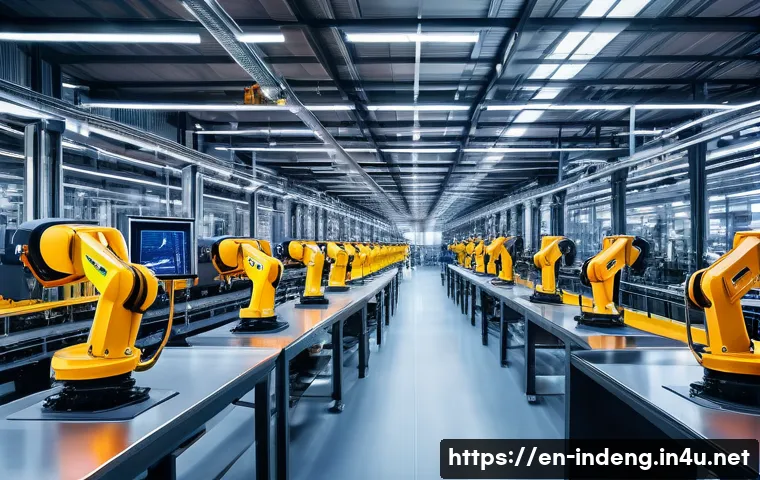
Common applications include automated visual inspection, object detection, part counting, barcode reading, and workflow observation. A camera may help determine whether an expected item is present, whether a label can be read, or whether items are moving through a defined step. These are useful starting points because the desired output can often be stated clearly: pass, fail, count, identify, or flag for review.
For quality inspection, the system should not simply produce an image score. It should support an operational decision, such as routing a questionable item to human review or recording a result in a quality workflow. For safety-related observation, human oversight and documented escalation procedures remain especially important when an error could have serious consequences.
When Visual Automation Does Not Solve the Underlying Process Problem
A vision system cannot fix unstable work instructions, inconsistent part presentation, unclear acceptance criteria, or an unresolved upstream process issue. If different operators do not agree on what counts as a defect, an AI model or rule-based inspection tool will inherit that ambiguity. Start by documenting the decision, the acceptable variation, and the action required when the system is uncertain.
Computer vision also deserves caution when products, packaging, lighting, or camera access change frequently. In these settings, improving fixtures, standardizing positions, or simplifying the workflow may create more value than adding complex automation immediately.
Three-Line Decision Summary for Engineers and Operations Managers
Evaluate vision automation when the visual decision is repeatable and connected to a real quality, throughput, or data-collection need.
Begin with manual or rule-based methods when the visual feature is stable and easy to define.
Use representative production testing before trusting any model with decisions that affect quality, safety, or regulatory outcomes.
Compare Rule-Based Vision, AI Models, and Manual Inspection
The right method depends less on whether AI is available and more on the type of visual variation in the task. A simple, stable check may suit rule-based machine vision. A more variable pattern may justify an AI vision model, provided the team can collect representative images and maintain the system over time.
Predictable Defects Versus Variable Defects
Rule-based vision is generally easier to consider when features are predictable: a part is present or missing, an item is in a known position, or a barcode must be readable. AI-based computer vision can be considered when visual appearance varies in ways that are difficult to describe with fixed rules. That does not remove the need for clear quality criteria; it increases the need for relevant image data and disciplined validation.
Accuracy, Speed, Explainability, and Operator Workload
Industrial teams should assess performance with false accepts, false rejects, precision, recall, and processing latency. The most important measure depends on the task. A false pass may be the larger concern for one inspection process, while excessive false rejects may create unnecessary rework or operator workload in another.
Explainability also matters in practice. Operators need to know what happens after a flag: Is the item stopped, separated, reviewed, reworked, or logged? A system that identifies exceptions but does not fit the real workflow can add friction rather than remove it.
Early Comparison Criteria: Capabilities, Limits, and Implementation Effort
When comparing enterprise machine-vision software or inspection-automation vendors, ask whether the proposed approach matches the visual task. Review camera placement, lens selection, lighting design, edge computing or data storage, and the connection to production or quality systems. A good demonstration should address the real operating environment rather than only ideal sample images.
Budget, ROI, and Cost Drivers for a Vision Automation Project
Exact cost, return on investment, and deployment timing depend on production volume, defect types, integration scope, site conditions, and required accuracy. A useful budget discussion separates the visible equipment purchase from the work needed to make the solution dependable in production.
Hardware, Lighting, Compute, Software, and Integration Costs
A production-ready solution typically combines imaging hardware, lighting, software, data storage or edge computing, and integration with operational systems. Industrial cameras and lenses must fit the viewing distance and field of view. Lighting must make the relevant feature visible without creating inconsistent reflections or shadows. Software may include machine-vision tools, model management, result logging, and interfaces to quality or production workflows.
An outsourced machine-vision integration quote may bundle some of these elements. Teams should still identify what is included: installation, configuration, testing, support, change management, and responsibility for future adjustments.
Costs Often Missed in Pilot Estimates: Labeling, Testing, Retraining, and Support
A pilot can reveal costs that are not obvious in an equipment list. AI projects may require image collection, labeling, review of edge cases, and retraining when product conditions change. Both AI and rule-based systems require testing across shifts, products, environmental conditions, and normal production variation. Operator oversight, exception handling, and support procedures also need an owner.
How to Frame ROI Without Assuming Labor Savings Will Be Immediate
Instead of assuming direct labor savings, frame the business case around the specific decision the system improves. It may reduce manual data collection, increase visibility into process flow, support more consistent inspection, or help teams respond to exceptions sooner. Whether these outcomes create sufficient value must be assessed locally. A pilot should test the operational impact, not only the model output.
A Practical Implementation Workflow for Industrial Engineering Teams
A practical deployment starts with a defined decision and ends with a defined response. The system should be designed as part of the operation, not treated as a camera added beside the operation.
Define the Decision the System Must Make
Write the decision in plain language. For example: detect an object, count units, read a barcode, identify a visible condition, or route uncertain items for review. Define who receives the result and what action follows. This step helps determine whether manual inspection, rule-based vision, AI software, or an industrial automation vendor is the more suitable path.
Collect Representative Images Across Shifts, Products, and Conditions
Images should reflect the real environment, including normal variation in product appearance, placement, lighting, and operating conditions. A model cannot be assumed reliable without representative testing under real conditions. The same is true for camera and lighting configurations that appear stable during a short demonstration.
Validate False-Pass and False-Reject Risks Before Deployment
Set acceptance thresholds based on the task and its consequences. Review false accepts and false rejects separately, then document escalation for uncertain cases. If an incorrect result could affect quality, safety, or regulatory requirements, retain human review and a documented procedure for handling exceptions.
Connect Results to Quality, Maintenance, or Production Workflows
A vision result becomes more useful when it reaches the right workflow. Quality teams may need inspection records. Maintenance teams may need visibility into recurring equipment-related patterns. Production teams may need a simple signal that supports the next step. Integration should be planned with the same care as the camera and model selection.
Common Failure Modes and How to Prevent Them
Most vision projects fail operationally because the conditions around the camera are treated as secondary. Reliable results depend on the total
Poor Lighting, Inconsistent Positioning, and Insufficient Image Coverage
Lighting, camera position, and lens selection can materially affect inspection accuracy. Control the image scene where possible. Use stable positioning, assess reflections and shadows, and ensure the camera sees the feature required for the decision. Collect images that cover the normal range of products and operating conditions rather than only clean examples.
Treating a Pilot Accuracy Score as Production Readiness
A pilot result is not proof that a system will perform reliably in every production condition. Review task-relevant metrics, test with representative data, and watch for environmental changes that could alter performance. Production readiness should include the response plan for errors, not only the reported accuracy measure.
Ignoring Worker Adoption, Exception Handling, and Process Ownership
Operators need clear instructions for alerts, rejected items, and system downtime. Someone should own the acceptance criteria, performance review, and change process when products or conditions change. Without this operational ownership, even capable inspection-automation software can become disconnected from the work it was meant to support.
Selection Criteria and Comparison Summary
Use this checklist before requesting enterprise machine-vision software demonstrations, industrial camera proposals, or systems-integrator quotes:
- Decision clarity: Can the team state exactly what the system must detect, count, read, or flag?
- Site fit: Have lighting, camera position, lens needs, product variation, and environmental conditions been reviewed?
- Validation plan: Will the proposal measure false accepts, false rejects, precision, recall, and processing latency where relevant?
- Workflow fit: Is there a documented human-review and escalation path for uncertain or high-consequence results?
- Total cost: Does the scope account for equipment, integration, data work, testing, maintenance, retraining, and support?
- Scalability: Can the approach be maintained if products, processes, or operational systems change?
For a vendor demo or quote review, check the provider’s official materials for included hardware, software, integration responsibilities, testing scope, and support conditions.
Final Thoughts
Computer vision can give industrial engineering teams a stronger way to observe and manage visual process information. Its value is highest when the task is specific, the imaging conditions are understood, and the result connects to a real operational workflow. The best choice is not always the most advanced model. It is the approach that can be tested, supported, and used reliably under actual production conditions.
Useful Information to Keep in Mind
1. A camera alone is not a complete inspection system.
2. Lighting and part presentation can be as important as the algorithm.
3. False-pass and false-reject risks should be evaluated separately.
4. Human review remains important when errors have significant consequences.
5. A site-specific requirements review is necessary before selecting hardware, cloud tools, or an integrator.
Important Considerations
No computer vision model should be assumed reliable without representative testing in real operating conditions. Exact costs, ROI, deployment timing, and suitable technology choices depend on the production environment, defect types, integration requirements, and required accuracy. Teams should confirm the operational scope, support model, and escalation procedures before deployment.
Frequently Asked Questions
Q1. Is computer vision worth the cost for a small manufacturing operation?
A1. It can be worth evaluating when a small operation has a repeatable visual task that affects inspection, counting, tracking, or manual data collection. The actual cost and ROI depend on site conditions, production volume, integration scope, defect types, and the accuracy required. A focused requirements review and representative pilot can help determine whether manual inspection, rule-based vision, or a more advanced solution is appropriate.
Q2. Should an industrial engineering team build a vision system in-house or hire a machine-vision integrator?
A2. An in-house approach may fit a team with the needed technical capability and capacity to manage imaging, data, testing, integration, and ongoing support. A systems integrator may fit when the project needs coordinated hardware, lighting, software, and operational-system integration. In either case, the team should define the decision, performance measures, support responsibilities, and real-site test conditions before selecting an approach.
Q3. What accuracy level is safe enough for automated visual quality inspection?
A3. There is no universal accuracy level that is safe enough for every inspection task. The appropriate threshold depends on the consequences of false accepts and false rejects, along with quality, safety, and regulatory requirements. Evaluate task-relevant measures such as precision, recall, false accepts, false rejects, and processing latency, then maintain human review and escalation procedures when an incorrect decision could have significant consequences.