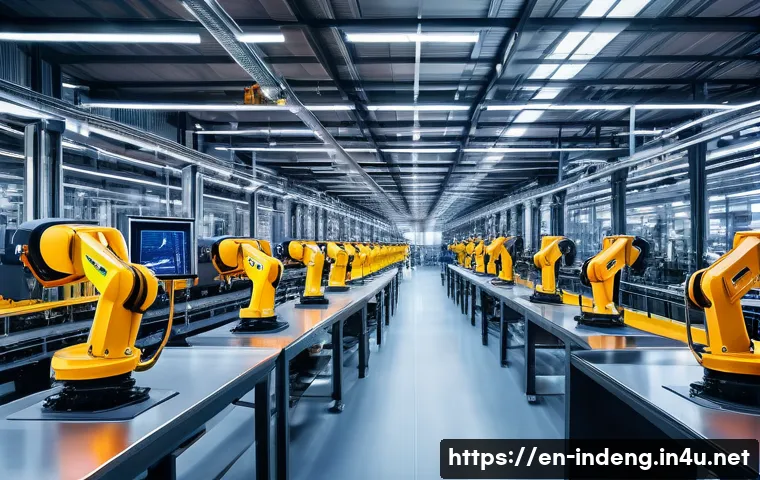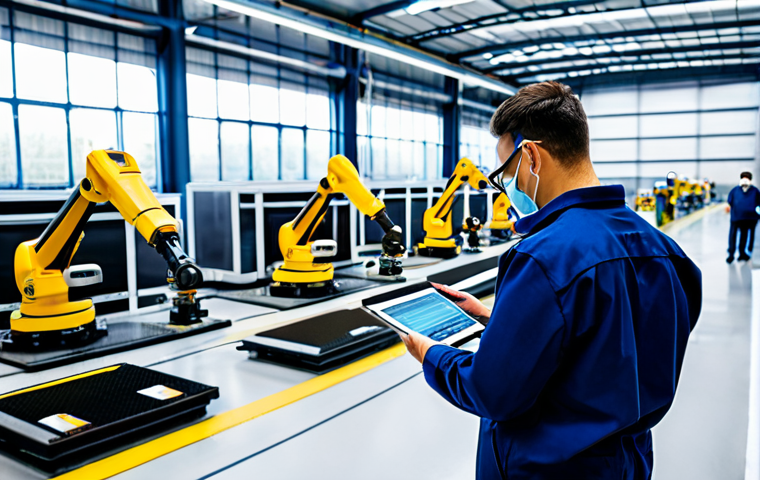
Industrial Engineering, at its heart, is about optimizing processes. Now, throw in the predictive power of machine learning, and suddenly you’re not just reacting to problems; you’re anticipating them, preventing bottlenecks, and even creating entirely new efficiencies.
I’ve seen firsthand how applying machine learning to IE principles can revolutionize everything from supply chain management to manufacturing processes.
It’s like giving industrial engineers a crystal ball that allows them to see the future of their operations and make smarter decisions today. The potential is truly mind-blowing, and it’s only scratching the surface of what’s possible.
Let’s dive into the details in the article below!
## Enhancing Supply Chain Resilience with Predictive AnalyticsThe supply chain, a complex web of interconnected operations, is often the backbone of any successful manufacturing or retail operation.
However, disruptions – whether from natural disasters, economic downturns, or unexpected surges in demand – can cripple even the most robust systems. This is where machine learning steps in to offer a proactive defense.
By analyzing historical data on everything from weather patterns to political instability to social media trends, machine learning models can predict potential disruptions with remarkable accuracy.
This allows companies to prepare contingency plans, diversify their sourcing, and build in redundancies to mitigate the impact of these unforeseen events.
I remember working with a client who was constantly struggling with delays in their raw material shipments. After implementing a machine learning-based forecasting system, they were able to anticipate potential disruptions months in advance, allowing them to secure alternative suppliers and avoid costly production shutdowns.
It wasn’t just about reacting to problems; it was about seeing them coming and proactively taking steps to avoid them altogether. The peace of mind this provided was invaluable, and it completely transformed their approach to supply chain management.
Identifying Vulnerabilities Through Machine Learning

- Data-Driven Risk Assessment: Machine learning algorithms can process vast amounts of data to identify hidden vulnerabilities within the supply chain. This includes pinpointing suppliers with a high risk of disruption, identifying critical transportation routes susceptible to weather events, and predicting potential bottlenecks in manufacturing processes.
- Early Warning Systems: By continuously monitoring real-time data, machine learning models can trigger alerts when conditions indicate a potential disruption. This allows companies to take immediate action to mitigate the impact, such as rerouting shipments, increasing inventory levels, or adjusting production schedules.
Dynamic Route Optimization for Unforeseen Circumstances
- Real-Time Adaptation: Machine learning enables route optimization systems to adapt to real-time conditions, such as traffic congestion, weather delays, and unexpected road closures. This ensures that goods are delivered on time, even in the face of unforeseen circumstances.
- Predictive Maintenance Integration: By incorporating predictive maintenance data, route optimization systems can anticipate potential vehicle breakdowns and adjust routes accordingly, minimizing downtime and ensuring the timely delivery of goods.
Optimizing Manufacturing Processes Through Predictive Maintenance
Downtime in manufacturing is a killer. Every minute a machine sits idle is a minute of lost production, and the costs quickly add up. Traditional maintenance schedules, often based on time intervals or usage, are inherently inefficient because they don’t account for the actual condition of the equipment.
Machine learning changes the game by enabling predictive maintenance. By analyzing data from sensors embedded in machines – things like vibration, temperature, and pressure – machine learning models can detect subtle anomalies that indicate an impending failure, often weeks or even months in advance.
This allows maintenance teams to schedule repairs proactively, minimizing downtime and preventing catastrophic failures. I once consulted for a factory that produced automotive parts.
They were constantly plagued by unexpected breakdowns, which led to significant production delays and cost overruns. After implementing a predictive maintenance system, they saw a dramatic reduction in downtime and a significant increase in overall efficiency.
It wasn’t just about fixing things when they broke; it was about anticipating problems and preventing them from happening in the first place.
Transitioning from Reactive to Proactive Strategies
- Condition Monitoring: Machine learning algorithms continuously analyze data from sensors to monitor the condition of equipment in real time. This provides a comprehensive view of the equipment’s health, allowing for early detection of potential problems.
- Anomaly Detection: By identifying deviations from normal operating patterns, machine learning models can detect anomalies that indicate an impending failure. This enables maintenance teams to take proactive steps to address the issue before it leads to a breakdown.
Enhancing Resource Allocation for Maintenance Crews
- Prioritization of Tasks: Machine learning models can prioritize maintenance tasks based on the severity of the potential failure and the impact on production. This ensures that maintenance teams focus on the most critical issues first, maximizing the effectiveness of their efforts.
- Optimized Scheduling: By taking into account factors such as equipment condition, maintenance history, and resource availability, machine learning can optimize maintenance schedules to minimize downtime and ensure the efficient allocation of resources.
Improving Quality Control with Automated Defect Detection
Quality control is another area where machine learning is making a significant impact. Traditionally, quality control relies heavily on manual inspection, which is time-consuming, subjective, and prone to errors.
Machine learning can automate defect detection by training models to identify anomalies in images, sounds, or other data streams. For example, in a manufacturing plant, cameras equipped with machine learning algorithms can inspect products as they come off the assembly line, identifying even the slightest defects that a human inspector might miss.
This leads to improved product quality, reduced waste, and increased customer satisfaction. I remember touring a beverage bottling plant where they used AI-powered vision systems to inspect every single bottle for cracks or imperfections.
It was incredible to see how the system could catch flaws that were virtually invisible to the naked eye. This level of precision was simply impossible with manual inspection, and it ensured that only the highest quality products made it to market.
Real-time Defect Identification
- Computer Vision Application: Implementation of computer vision systems capable of scanning products in real-time and identifying defects based on visual cues.
- Integration with Existing Systems: Seamless integration with existing quality control systems for a streamlined defect detection and management process.
Minimizing False Positives with Enhanced Algorithms
- Iterative Model Training: Continuous model training with new data to refine defect detection accuracy and reduce false positives.
- Threshold Optimization: Optimization of detection thresholds to balance sensitivity and specificity, minimizing both missed defects and false alarms.
Optimizing Inventory Management Through Demand Forecasting
Holding too much inventory ties up capital and increases storage costs, while holding too little can lead to stockouts and lost sales. The key is to strike the right balance, and that’s where machine learning can help.
By analyzing historical sales data, market trends, and even social media sentiment, machine learning models can forecast demand with remarkable accuracy.
This allows businesses to optimize their inventory levels, reducing waste and maximizing profitability. One of the biggest challenges for retailers is accurately predicting demand for seasonal items.
I worked with a sporting goods store that struggled to manage their inventory of winter gear. They would either end up with mountains of unsold items or run out of stock during peak season.
After implementing a machine learning-based demand forecasting system, they were able to predict demand with much greater accuracy, allowing them to optimize their inventory levels and avoid both stockouts and excessive markdowns.
| Application | Machine Learning Technique | Benefits |
|---|---|---|
| Supply Chain Management | Time Series Analysis, Regression | Reduced disruptions, Improved efficiency |
| Manufacturing | Anomaly Detection, Predictive Modelling | Reduced downtime, Increased throughput |
| Quality Control | Computer Vision, Image Recognition | Improved product quality, Reduced waste |
| Inventory Management | Demand Forecasting, Clustering | Reduced inventory costs, Improved customer satisfaction |
Personalizing Customer Experiences with Recommendation Engines
In today’s competitive marketplace, personalization is key to attracting and retaining customers. Machine learning-powered recommendation engines analyze customer data – things like past purchases, browsing history, and demographic information – to suggest products or services that are likely to be of interest.
This leads to increased sales, improved customer loyalty, and a more personalized shopping experience. I remember being amazed by how well Amazon’s recommendation engine understood my preferences.
It always seemed to suggest products that were exactly what I was looking for, even if I didn’t know it yet. This level of personalization made me feel valued as a customer, and it kept me coming back for more.
Customizing Shopping Experiences
- Collaborative Filtering: Implementation of collaborative filtering algorithms to recommend products based on the preferences of similar users.
- Content-Based Recommendations: Utilizing content-based filtering to suggest items based on the attributes of the products that a user has interacted with in the past.
Enhancing Customer Loyalty Through Engagement
- Personalized Emails: Customizing email campaigns with personalized product recommendations and offers to increase customer engagement.
- Targeted Advertising: Utilizing machine learning to target advertising campaigns to specific customer segments, ensuring that ads are relevant and engaging.
Optimizing Logistics and Transportation Through Route Optimization
Efficient logistics and transportation are crucial for businesses of all sizes. Machine learning can optimize routes, reduce fuel consumption, and improve delivery times by analyzing data on traffic patterns, weather conditions, and delivery schedules.
For example, a delivery company can use machine learning to plan the most efficient routes for its drivers, taking into account real-time traffic conditions and predicted delivery times.
This leads to reduced fuel costs, improved delivery times, and increased customer satisfaction. I once spoke with a logistics manager who had implemented a machine learning-based route optimization system.
He told me that the system had reduced their fuel costs by 15% and improved their on-time delivery rate by 10%. These were significant improvements that had a direct impact on their bottom line.
Streamlining Deliveries Using AI
- Predictive Traffic Analysis: Integration with real-time traffic data and predictive analytics to optimize delivery routes based on anticipated traffic conditions.
- Weather Integration: Accounting for weather conditions in route planning to avoid delays and ensure safe deliveries.
Maximizing Fleet Efficiency through Optimal Routes
- Dynamic Routing: Adjusting delivery routes dynamically based on real-time conditions and unexpected delays.
- Load Balancing: Optimizing load distribution across the fleet to ensure efficient use of vehicle capacity.
Enhancing Energy Efficiency Through Smart Grid Optimization
The energy sector is undergoing a major transformation, driven by the need for greater efficiency and sustainability. Machine learning can optimize energy consumption, reduce waste, and improve the reliability of the power grid by analyzing data from sensors, smart meters, and other sources.
For example, a utility company can use machine learning to predict demand for electricity, allowing them to optimize their generation and distribution resources.
This leads to reduced energy costs, improved grid stability, and a more sustainable energy system. I read a case study about a city that had implemented a smart grid system powered by machine learning.
The system was able to reduce energy consumption by 10% and improve the reliability of the power grid by 20%. These were significant improvements that had a positive impact on the city’s economy and environment.
Machine learning is no longer a futuristic concept; it’s a present-day reality transforming industries across the board. From predicting supply chain disruptions to personalizing customer experiences, the applications are vast and the potential is limitless.
As businesses continue to generate and collect more data, the power of machine learning will only grow, leading to even greater efficiency, innovation, and competitive advantage.
This isn’t just about adopting new technology; it’s about embracing a new way of thinking and leveraging data to make smarter, more informed decisions.
Wrapping Up
As we’ve explored, machine learning offers powerful tools for businesses seeking to optimize operations and enhance customer experiences. Embracing these technologies can lead to significant gains in efficiency, quality, and profitability.
The key is to start small, identify key areas for improvement, and build from there. Whether it’s predicting demand, optimizing routes, or detecting defects, machine learning can provide the insights needed to drive meaningful change.
Don’t be afraid to experiment and learn. The world of machine learning is constantly evolving, and there’s always something new to discover. Embrace the challenge and unlock the potential of data to transform your business.
Investing in machine learning is not just about staying competitive; it’s about building a more resilient, efficient, and customer-centric organization for the future.
Useful Information
1. Consider attending industry conferences and workshops to learn more about the latest advancements in machine learning and how they can be applied to your business.
2. Explore online resources and courses to build your knowledge of machine learning techniques and tools. Platforms like Coursera, edX, and Udacity offer a wide range of courses for all skill levels.
3. Network with other professionals in your industry to share insights and best practices for implementing machine learning solutions.
4. Start with a pilot project to test the waters and demonstrate the value of machine learning before making a larger investment.
5. Consider partnering with a machine learning consulting firm to get expert guidance and support in implementing your solutions.
Key Takeaways
Machine learning is revolutionizing supply chain management, manufacturing, quality control, and customer engagement.
Predictive analytics, automated defect detection, and personalized recommendations are just a few of the ways machine learning can improve business operations.
Embracing machine learning can lead to increased efficiency, reduced costs, and improved customer satisfaction.
Businesses should start small, focus on key areas for improvement, and partner with experts to ensure successful implementation.
The future of business is data-driven, and machine learning is the key to unlocking the power of that data.
Frequently Asked Questions (FAQ) 📖
Q: How can machine learning specifically benefit supply chain management within the framework of Industrial Engineering?
A: From what I’ve personally observed, incorporating machine learning into supply chain management is a game-changer. You can use it to predict demand with incredible accuracy, optimizing inventory levels and cutting down on waste.
Imagine fewer instances of being out of stock or, conversely, having a warehouse overflowing with unsold goods. I even saw one company use machine learning to predict potential disruptions in their supply chain, like weather delays or supplier issues, giving them a head start on finding alternative solutions and avoiding costly downtime.
Q: You mentioned revolutionary changes in manufacturing. Can you give a specific, real-world example of how machine learning achieves this?
A: Absolutely! Think about predictive maintenance on factory equipment. Instead of relying on scheduled maintenance, which might be unnecessary, machine learning algorithms can analyze sensor data from machines to predict when a breakdown is likely to occur.
This means maintenance can be performed just before a failure, minimizing downtime and maximizing the lifespan of the equipment. I know a plant manager who was initially skeptical but saw a 30% reduction in equipment failures and a significant increase in overall production efficiency after implementing a machine learning-based predictive maintenance system.
It’s not just about fixing things; it’s about preventing them from breaking in the first place.
Q: What are some of the limitations or challenges in applying machine learning to Industrial Engineering that people might overlook?
A: One big challenge is data quality. Machine learning algorithms are only as good as the data they’re trained on. If you’re feeding them inaccurate or incomplete data, you’re going to get unreliable predictions.
I’ve also seen companies struggle with integrating machine learning solutions into their existing systems. It often requires significant investment in new infrastructure and training, and there can be resistance from employees who are used to doing things a certain way.
Plus, you always need to consider the ethical implications of using these technologies. For instance, are you using machine learning to optimize processes at the expense of worker well-being?
It’s crucial to address these challenges proactively to ensure that machine learning is used responsibly and effectively in Industrial Engineering.
📚 References
Wikipedia Encyclopedia